
Impact of 2026 drought on UKWe used satellite data across this century to study the impact of the 2026 drought on vegetation across the UK
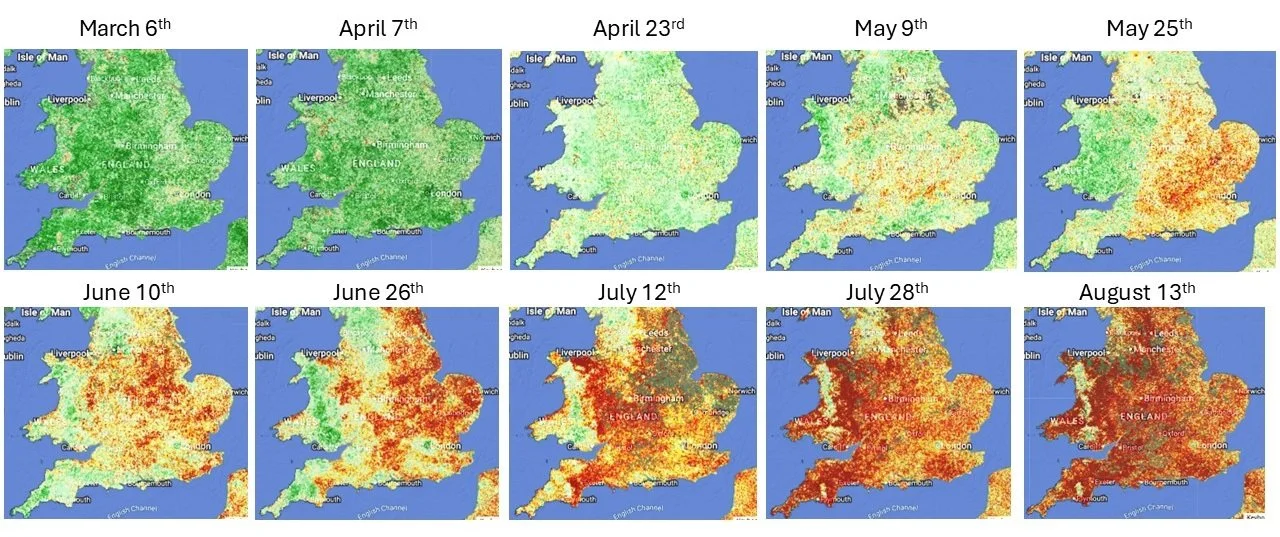
The Summer of ‘26. Drought spread across much of England and Wales. And satellites captured the vegetation decline as it spread.
The snapshots shown here track 2026 NDVI (Normalized Difference Vegetation Index) — a satellite-based sensor measure of vegetation greenness and photosynthetic activity — expressed as an anomaly with reference to the 2000–2025 average for each date. Green intensity indicates growth increasingly ahead of normal, red intensity indicates that vegetation was increasingly less green, less dense, or was developing more slowly than the 26-year average. In April 2026, the country was almost uniformly green. By May, it wasn't.
Hydrologists called this a flash drought. Not a single bad season, but a dry spring that left soil parched, followed by record heatwaves that pushed crops and grassland into stress within weeks. Southern England received roughly half its usual spring rainfall; once temperatures started to increase the vegetation anomaly occurred within weeks, even as the underlying deficit kept building toward England and Wales's driest July on record. The Environment Agency's own data trace the same trajectory; drought status followed through the summer, and some rivers fell lower than anyone currently working on them had ever seen.
What the snapshots can't show is why some areas remained green for longer. That's the question behind the Centre for Dynamic Soils' work with partners Waitrose & Partners , Wildfarmed and Yeo Valley Organic; long-term satellite records, separate from these snapshots, we're testing the extent to which agricultural management and underlying soil properties produce measurable differences in how vegetation withstands drought: field by field, decade by decade.
Tracking that droughts are worsening is easy. Building long-term, on-farm evidence for which soils and management approaches are more resistant to hydroclimatic stress — and why — is more challenging, but likely to provide knowledge to help agriculture adapt.
Professor Andy Neal, Director of Research
Centre for Dynamic Soils
#SoilHealth #SoilScience #RegenerativeAgriculture #Drought2026 #ClimateResilience #UKFarming